

A Complete Guide to Bay Window Poles
Choosing the right bay window pole can make a huge difference to how smoothly your curtains operate and how neat the finished result looks. Understanding the different types, how they fit, and what works best for your window shape will help you make an informed decision. Below is a clear breakdown of everything you need to know.
What Are Bay Window Poles?
A bay window pole is a curtain pole designed to follow the angles or curves of a bay window. When fitted correctly, it allows curtains—whether eyelet or pleated with rings—to move around the bends. Bay Curtain Pole-Track with gliders suitable for pencil pleat, pinch pleat and wave headings.
However, not all bay poles perform equally well. Some solutions glide smoothly, while others can be frustrating in daily use. Here’s what to look out for.
Types of Bay Window Poles
1. Hand‑Bendable Bay Poles
These poles can be shaped on-site to follow the angles of your bay. They come in several styles:
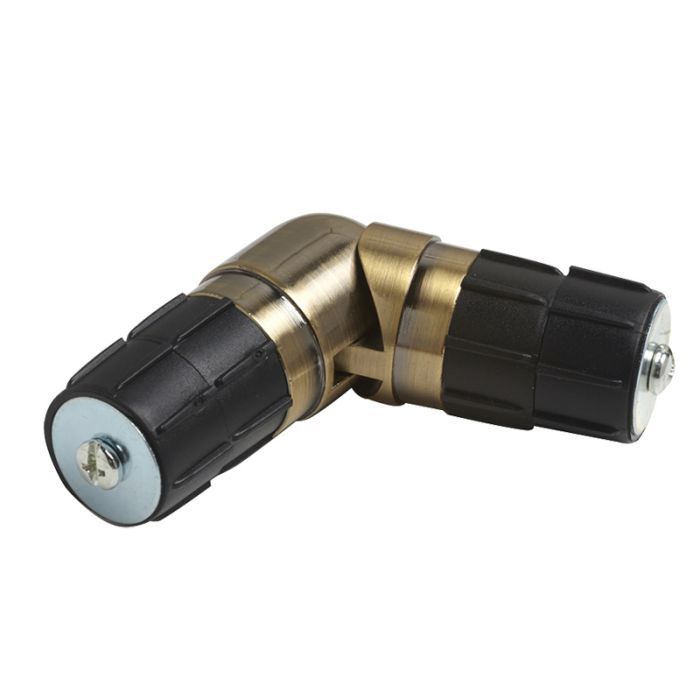
- Knuckle (Elbow) Joint Poles
Use elbow‑style joints to create the angles. They are simple to install but often cause poor gliding, as curtains tend to snag or slow down at each joint. - Serrated (Bendable) Poles
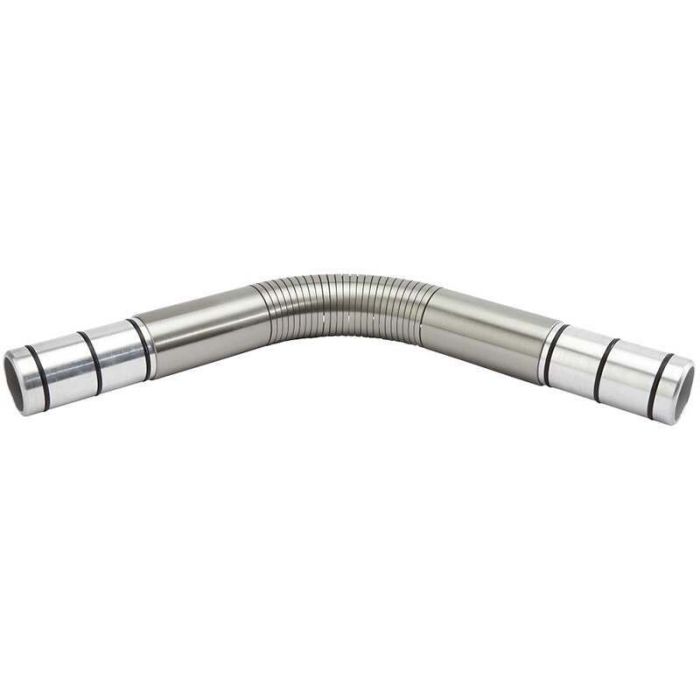
These feature a series of small bends that create a smoother curve. They offer better movement than knuckle joints, allowing rings or eyelets to pass around corners more easily. - Factory‑Bent Poles
The premium option. These are manufactured to match your exact bay window shape, creating a continuous, joint‑free pole. With no interruptions, rings and eyelets glide effortlessly around the bends.
Fitting Bay Window Poles
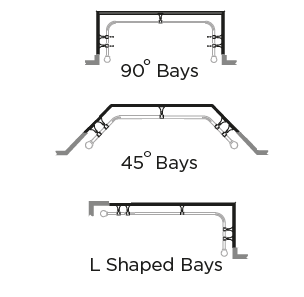
Most bay poles require a minimum of five brackets:
- Two on each side to stabilise the straight sections
- One central bracket for support
Because standard brackets block the path of rings or eyelets, curtains usually stack after the second bracket from each end. This limits how far the curtains can be drawn back.
The larger the bay the more risk of the pole twisting under the weight of the curtain and operation.
Passing Brackets and Rings (for Pleated Curtains Only)
Should you want the curtains to travel further around the bay, choose a pole system with passing brackets and C‑shaped passing rings. These allow the rings to move past the brackets, enabling:
- A wider opening
- More even stacking
- Better support for heavy, full‑length curtains (as more brackets can be used)
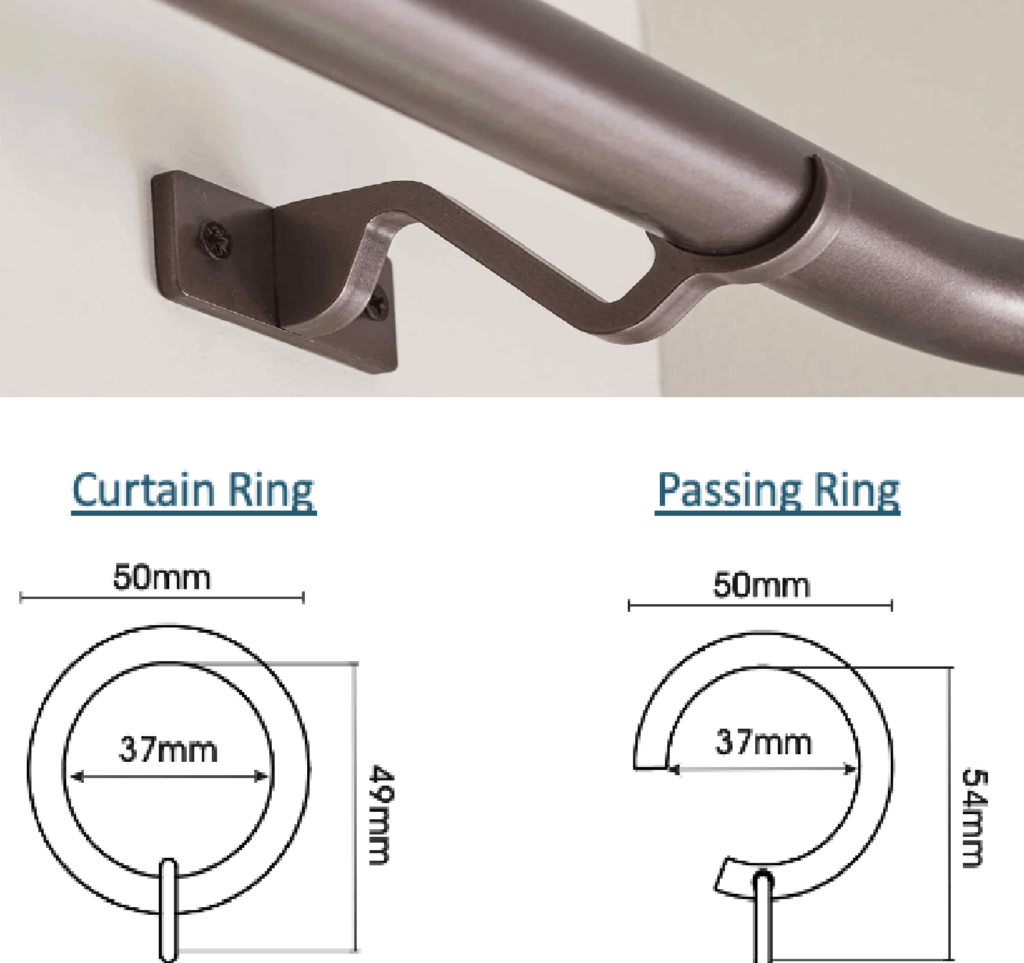
Passing Brackets and Rings (for Pleated Curtains Only)
If you want the curtains to travel further around the bay, choose a pole system with passing brackets and C‑shaped passing rings. These allow the rings to move past the brackets, enabling:
Better support for heavy, full‑length curtains (as more brackets can be used)
A wider opening
More even stacking
Important: Passing rings do not work with eyelet curtains.
Also note that because passing rings have to miss the supporting brackets, some customers find they can occasionally catch on the bracket.
Pole Alternatives: Round Curtain Tracks
If you want the smoothest possible operation, a round bay window curtain track is often the best choice.
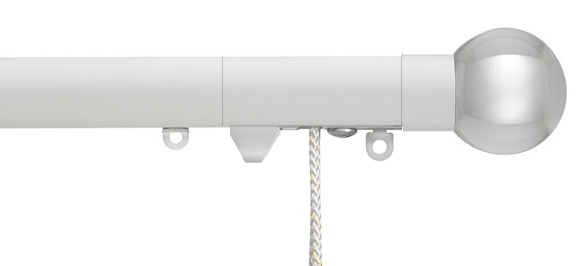
Why Choose a Track Instead of a Pole?
- Factory‑bent to your exact bay shape for perfect alignment
- Gliders run underneath the track, so they never hit brackets
- Effortless movement, even around tight angles
- Suitable for heavy curtains, thanks to multiple secure fixing points
- Available in a range of colours and finishes
- Can be hand‑drawn, corded, or motorised
- Works with Pinch Pleat, Pencil Pleat and Wave headings
- Curtains can be closer to the bay ceiling so less light incursion.
Tracks are especially useful when furniture, radiators, or ornaments make it difficult to reach across the bay to pull the curtains manually.
Which Option Should You Choose?
- Factory‑bent pole if you want the look of a pole with the best possible gliding performance.
- Passing brackets and rings if you need pleated curtains to open wider around the bay.
- Round curtain track if you want the smoothest operation, maximum durability, or motorisation.
What can go wrong with poles?
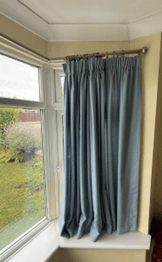
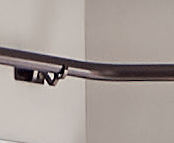
Corners sagging making the curtains lower than required, onto the window sill or the floor. This potentially happens with poles that have no intermeadiate brackets as the weight falls onto the corners like trying to lift a heavy object at the end of a long pole.

Key Takeaways
- A Bay Pole is designed to follow the angles of a bay window, allowing smooth curtain movement around the bends.
- Types of Bay Poles include hand-bendable options and factory-bent poles for better gliding performance.
- To fit a Bay Pole, use at least five brackets, and consider passing brackets and rings for pleated curtains.
- Round curtain tracks offer smooth operation and are ideal for heavy curtains, especially in tight spaces.
- Choose a factory-bent pole for aesthetics, passing brackets for wider openings, or round tracks for optimal functionality.